
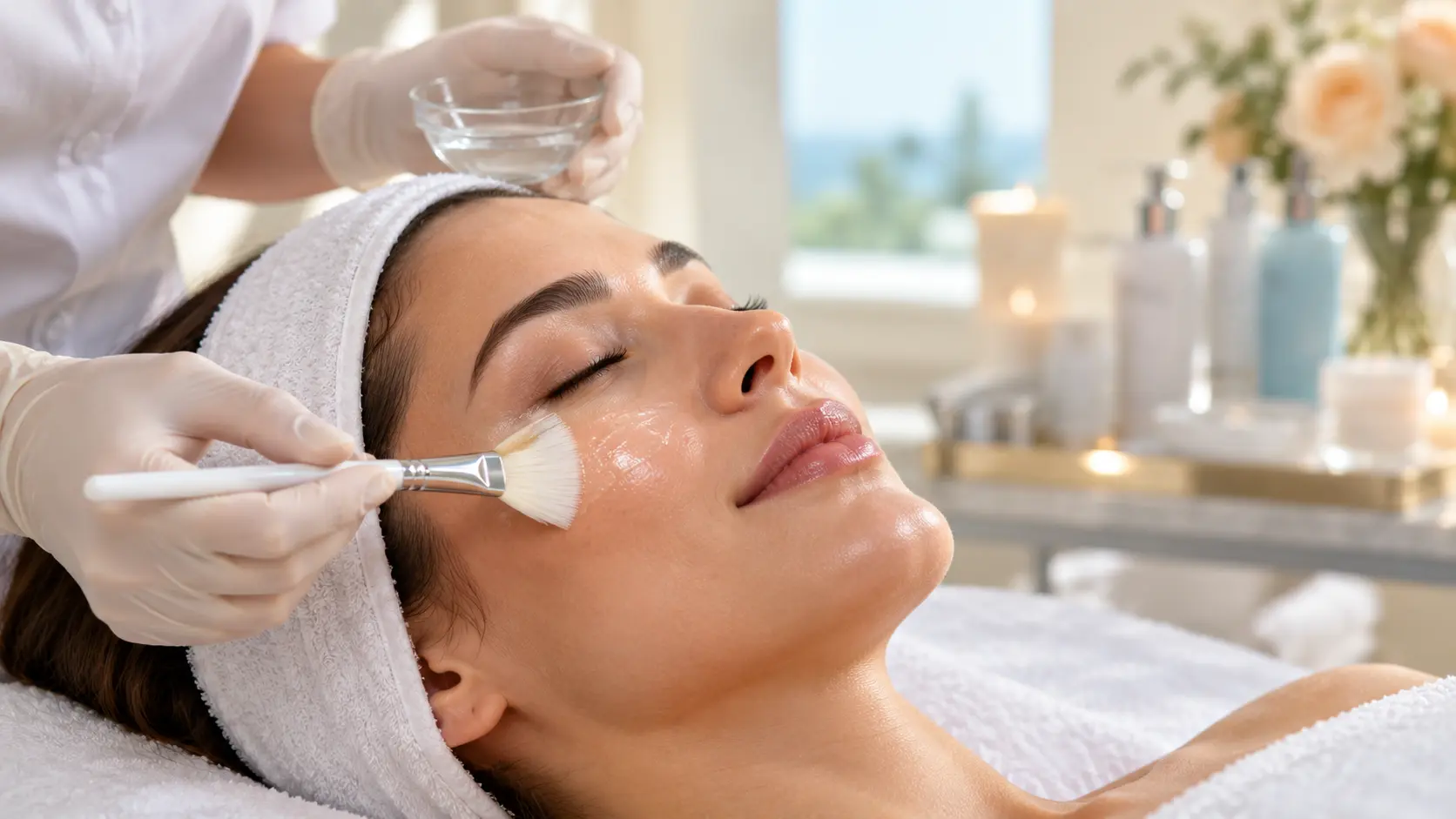
Brightening Peel Treatment: What It Is, How It Works, Cost & Side Effects
If your skin looks dull, uneven or tired no matter how many serums you try, a brightening peel treatment is often the next step people ask about. It is also one of the most confusing things to research online. Some pages promise “whitening,” others warn about side effects, and almost none tell you what a peel really costs or what the week afterward looks like.
This guide answers all of it in plain language. You will learn what a brightening peel is, how the acids work, which peel suits which concern, what it costs in Metro Detroit, what is normal (and not normal) afterward, and how to keep your results. It is built around the peel menu at Serene Beauty & Browz, where licensed aestheticians perform peels at our Warren and Sterling Heights, Michigan locations, and it draws on guidance from professional skincare organizations.
Quick Answer
A brightening peel treatment is a professional exfoliation that uses fruit enzymes or gentle-to-moderate acids to lift dull, dead surface cells and speed up cell turnover, so skin looks smoother, brighter and more even-toned. At Serene Beauty & Browz in Warren and Sterling Heights, MI, brightening-focused peels start at $45, take about 30–45 minutes and are typically repeated every 4–6 weeks.
In This Guide
- What is a brightening peel treatment?
- How a brightening peel works
- Types of brightening peels and which to choose
- Benefits and who it is for
- What to expect: before, during and after
- Side effects and aftercare
- How many sessions and how long results last
- Brightening peel cost
- Brightening peel near me: Warren & Sterling Heights
- FAQs
What Is a Brightening Peel Treatment?
A brightening peel treatment is a professional skin-renewal service. Your aesthetician applies a carefully chosen solution, such as fruit enzymes or lactic, glycolic, phytic or salicylic acid, to loosen the bonds holding dull, dead cells on the surface of your skin. Once that top layer sheds, fresher skin is exposed and your natural cell turnover speeds up.
The visible payoff is skin that reflects light better. That is why a brightening peel is commonly used for:
- Dull, tired-looking or “flat” skin
- Sun spots and uneven skin tone
- Dark marks left behind after breakouts
- Rough texture and enlarged-looking pores
- A quick glow before a special event
Brightening Peel vs. “Whitening” Peel: What Is the Difference?
Many people search for a “skin whitening peel treatment,” and the two terms get used interchangeably online. They are not the same goal. A professional peel does not bleach your skin or change your natural color. What it can do is clear away dull buildup and soften the look of discoloration, so your own tone looks clearer and more even.
That is why we talk about brightening and tone-evening rather than “whitening.” If a provider or product promises dramatic lightening in a single visit, treat it as a red flag. The U.S. FDA has also warned consumers about skin-lightening products that contain mercury, which is another reason to stick with licensed professionals.
Brightening Peel vs. Brightening Facial
People searching for a “brightening peel facial” are often comparing two different services. A facial is a multi-step treatment that usually combines cleansing, exfoliation, extractions, a mask, massage and hydration. It is excellent for glow, hydration and relaxation. A peel zooms in on one step, exfoliation, and uses a stronger, more targeted solution to correct tone and texture.
Many clients alternate: a peel when they want visible correction, a facial for maintenance in between. You can explore both on our facial services page.
How Does a Brightening Peel Work?
Skin color comes from pigment made deep in the epidermis, but the pigment ends up in the cells that travel to the surface. Dull, uneven skin often means pigmented, dead cells are lingering there. A peel dissolves the “glue” between those cells so they shed faster, and the fresher layer beneath takes their place. Repeating this over a series of visits is how a peel gradually softens the look of dark spots.
A Step-by-Step Look at Your Appointment
- Skin consultation. Your aesthetician reviews your skin type, concerns, medications and sun exposure, then recommends the right peel strength.
- Cleansing and prep. Oil, makeup and surface debris are removed so the solution spreads evenly.
- Peel application. The solution is applied in thin layers. Most peels stay on the skin only a few minutes while your aesthetician watches closely.
- Neutralizing or timing. Some peels are neutralized to stop the action, while others are self-timed and stop on their own.
- Calming finish. A soothing mask, moisturizer and broad-spectrum SPF protect freshly exfoliated skin.
- Aftercare plan. You leave with clear instructions for the following days.
Peel Ingredients You Will Hear About
- Fruit enzymes: the gentlest option. They lift dull cells without harsh acids.
- Lactic acid: a milder alpha-hydroxy acid (AHA) that also supports hydration.
- Glycolic acid: a small-molecule AHA that penetrates deeper for sun damage, pores and texture.
- Phytic acid: often paired with glycolic acid in peels aimed at uneven tone.
- Salicylic acid: a beta-hydroxy acid (BHA) that works inside oily, clogged pores, useful for breakout-related marks.
- Jessner’s and TCA: deeper formulas for stubborn pigment or sun damage, with visible peeling and longer recovery.
Good to know: spots can look darker first
As pigmented cells rise to the surface and begin to shed, dark areas can look more noticeable for a day or two before they fade. This is a normal part of the process for many people, not a sign the peel failed. It is one more reason to avoid picking and to keep up daily sunscreen.
Types of Brightening Peels and How to Choose
“Brightening peel” is not one product. It is a goal that several peels can serve, from a 30-minute enzyme refresh to a deeper tone-correcting treatment. Here is how the options on our menu compare.
| Peel | Best For | Downtime | Time | Price |
|---|---|---|---|---|
| Enzyme Peel | First-timers, sensitive or dull skin, pre-event glow | None to minimal | ~30 min | $45 |
| Lactic Peel | Dry or dehydrated skin, early fine lines, gradual texture change | Light flaking 1–2 days | ~40 min | $79 |
| Glycolic Peel | Sun damage, pores, uneven texture, visible results with little flaking | Minimal | 40–45 min | $85 |
| Phytic Lightening Peel | Uneven tone, post-acne marks, melasma-prone skin (consultation required) | Light peeling 2–3 days | 40–45 min | $85 |
| Acne Peel | Blackheads, whiteheads, congested or oily skin | Dryness 1–3 days | ~40 min | $85 |
| Jessner’s Peel | Stubborn hyperpigmentation, mild acne scarring (consultation required) | Peeling 3–5 days | ~45 min | $80 |
| TCA Peel | Deeper sun damage and tone concerns, for clients who tolerate lighter peels (in-person consultation required) | Peeling 5–7 days | 45–60 min | $125 |
Prices and details reflect our chemical peel page as of October 2026 and may change.
A Simple Way to Choose
- New to peels or have sensitive skin? Start with an Enzyme or Lactic Peel and build from there.
- Mainly dull skin, sun damage or texture? A Glycolic Peel is a common fit.
- Mainly uneven tone or post-acne marks? The Phytic Lightening Peel is designed for that goal.
- Stubborn pigment that lighter peels have not moved? Ask about Jessner’s or TCA at your consultation.
For a closer look at dark-spot-specific planning, see our guide to a facial peel for dark spots.
Not Sure Which Brightening Peel Fits Your Skin?
Book a free consultation at Serene Beauty & Browz and our licensed aestheticians will match the peel to your skin type, goals and schedule.
Book a Free Consultation See All Peels & PricesBenefits of a Brightening Peel Treatment
- A visible glow. Gentle peels often show a fresher look within a day or two.
- More even tone. Repeated peels can soften the look of sun spots and post-acne marks.
- Smoother texture. Removing buildup refines rough patches and makes pores look cleaner.
- A better base for skincare. Skin without a layer of dead cells tends to take up serums and moisturizers more easily.
- Low downtime options. Enzyme, lactic and glycolic peels let most people return to normal activities right away.
- Customizable. Strength, acid type and schedule can all be tailored to you.
Who Is a Good Candidate for a Brightening Peel?
Good Candidates
Professional skincare organizations note that most skin colors and types can benefit from a peel, as long as the right peel is chosen. You may be a good candidate if you have dullness, sun damage, post-acne marks, uneven tone, or rough texture, and you are willing to wear sunscreen every day.
Who Should Wait or Skip
⚠ Tell your aesthetician before booking if any of these apply
- You have used isotretinoin (Accutane) in the last 6–12 months, depending on the peel
- You are pregnant or breastfeeding (get your physician’s clearance first)
- You have an active cold sore, skin infection, open wound or sunburn
- You are in an eczema or dermatitis flare-up
- You have a history of keloid or raised scarring (important for deeper peels)
- You waxed or had laser treatment in the area within the last 5–7 days
A note for deeper skin tones: darker skin can absolutely benefit from peels, but it is more prone to post-inflammatory hyperpigmentation, meaning new dark marks after irritation. That is why we lean toward conservative peels, a consultation first, and strict sun protection for clients with higher Fitzpatrick skin types.
What to Expect: Before, During and After Your Peel
Before Your Appointment
- Avoid sunburn and tanning beds in the week or two beforehand.
- Ask which active products to pause. Retinoids and strong exfoliants are the usual ones.
- Skip waxing, threading or laser on the treatment area for 5–7 days.
- Share your full medication and skincare history, including anything prescription.
- Take a clear, well-lit “before” photo so you can judge progress honestly.
During the Peel
Most clients feel warmth, tingling or mild stinging while the solution is on, and it fades quickly. Gentle peels feel very comfortable. Deeper peels such as TCA feel more noticeable but are well tolerated by most people. Your aesthetician stays with you and watches your skin the whole time.
After the Peel: A Typical Timeline
Day 0 (Treatment Day)
Skin is often pink, a little shiny and slightly tight. Mild peels leave only brief pinkness. Apply a gentle moisturizer and broad-spectrum SPF 30 or higher.
Days 1–3
Expect dryness, tightness or light flaking with lactic, phytic and acne peels. With enzyme and glycolic peels, many people notice little more than a glow.
Days 3–7 (Deeper Peels)
Jessner’s typically peels for 3–5 days and TCA for 5–7. Let skin shed on its own. Picking is the fastest way to turn a normal peel into a pigment problem.
Week 2 and Beyond
Fresh, smoother skin is now on display. This is the point to judge your result against your before photo and plan your next session if you are doing a series.
Brightening Peel Treatment Side Effects
Anyone researching a “whitening peel treatment” should look at side effects first. The good news is that for light peels done by a trained professional, side effects are usually mild and temporary. The risk goes up when the peel is too strong for your skin, aftercare is skipped, or products are used without guidance.
Common and Normal
- Redness or pinkness that settles within hours to a couple of days
- Warmth, tingling or mild stinging during the treatment
- Tightness, dryness and light flaking
- Extra sun sensitivity while skin renews
- Dark spots that look more noticeable for a day or two before fading
Less Common, But Take Seriously
⚠ Contact your aesthetician or physician if you notice:
- Blistering, crusting or oozing
- Severe burning or pain that is getting worse instead of better
- Redness that spreads or lasts far longer than you were told to expect
- Signs of infection such as pus, increasing swelling or fever
- New dark patches appearing after the peel
Why Most Side Effects Are Avoidable
When peels go wrong, the causes are usually the same: the wrong peel strength for the skin, an incomplete skin history, picking at flaking skin, or skipping sunscreen. A proper consultation, honest answers and disciplined aftercare solve most of it. For a deeper breakdown, read our guide to chemical peel safety and who should perform them.
Aftercare Tips and Common Mistakes
Aftercare Checklist
- Wear broad-spectrum SPF 30+ every day. It protects your results and helps prevent new dark marks.
- Limit direct sun and avoid tanning beds for at least 48–72 hours, longer after deeper peels.
- Moisturize with a gentle, fragrance-free product, and use a mild cleanser.
- Pause retinoids, acids and scrubs for the number of days your aesthetician gives you (often 3–7).
- Skip heat such as saunas and hot yoga for 24 hours.
- Hold the makeup for at least 24 hours, longer if you are actively flaking.
Michigan tip: fall and winter are a popular time for peels because summer sun is behind you, but UV does not disappear. Snow glare and car windows still expose your skin, so keep the SPF going all year.
Common Mistakes to Avoid
- Picking or peeling flaking skin
- Skipping sunscreen because it is cloudy
- Stacking retinoids and exfoliating acids too soon after a peel
- Booking a peel right before a beach trip or long outdoor event
- Waxing or lasering the same area within days of the peel
- Using strong at-home peel kits or unregulated “whitening” products on top of a professional peel
- Expecting one peel to erase long-standing pigmentation
How Many Sessions Do You Need, and How Long Do Results Last?
One peel gives you a glow. Correcting pigment takes a series. Professional guidance consistently notes that a series of peels is usually recommended for maximum results, and may be necessary for challenging concerns such as hyperpigmentation. At Serene, most clients do well with a peel every 4–6 weeks, with deeper peels spaced further apart so skin can fully heal.
- Glow and texture: often visible after one gentle peel.
- Tone and dark marks: gradual improvement over several sessions.
- Keeping results: daily SPF, a gentle routine, and occasional maintenance peels.
Set realistic expectations
Peels improve the look of discoloration; they do not permanently remove the cause. Sun, hormones and inflammation can bring pigment back, which is why sun protection is part of the treatment plan, not an optional extra. Results vary by individual.
Brightening Peel Cost in Michigan
Brightening peel cost depends on the peel type, the strength, and how many sessions your goals require. At Serene Beauty & Browz, our peel menu runs from $45 for an Enzyme Peel (which includes cleansing, enzyme application, toning, a mask, moisturizer and SPF) up to $125 for a TCA Peel. Most brightening-focused clients fall between $45 and $85 per visit: Lactic is $79, and Glycolic and Phytic Lightening are $85.
What Changes the Price
- The acid or enzyme blend and its strength
- Whether a consultation or patch test is needed first
- How many sessions you need for your goal
- Aftercare products and add-on treatments
If you plan on regular visits, ask about our membership options.
Pros and Cons of Brightening Peels
| Pros | Cons |
|---|---|
| Quick appointment (about 30–60 minutes) | Results build gradually and need a series for pigment |
| Little to no downtime with light peels | Temporary dryness, flaking and sun sensitivity |
| Customizable strength for different skin types | Deeper peels mean visible peeling for 3–7 days |
| Accessible entry price (from $45) | Not suitable for everyone (pregnancy, isotretinoin, active infections) |
| Improves tone, texture and glow together | Needs daily SPF to protect and maintain results |
Brightening Peel vs. Other Glow Treatments
| Treatment | Main Focus | Choose It When |
|---|---|---|
| Brightening peel | Surface renewal, tone and texture | Dullness, dark marks, uneven tone |
| Brightening facial | Cleansing, hydration, glow, relaxation | Maintenance and a gentle pick-me-up |
| Microneedling | Texture, scarring and collagen stimulation | Acne scars or fine lines are the main concern (see our microneedling page) |
| At-home brightening products | Daily maintenance (vitamin C, gentle acids, SPF) | Between professional visits, with guidance |
Expert Tips for Better Brightening Results
- Start gentler than you think you need. A mild peel done consistently usually beats an aggressive one that forces you into recovery.
- Treat sunscreen as part of the peel. Without it, you can undo weeks of progress in a single sunny afternoon.
- Time it well. Schedule deeper peels at least a week before big events or trips.
- Keep your routine simple. Gentle cleanser, moisturizer and SPF is plenty while your skin renews.
- Photograph your progress. Brightening is gradual, and same-light photos show change your mirror will miss.
- Follow a plan, not a one-off. Ask your aesthetician for a schedule tied to your specific concern.
Brightening Peel Near Me: Warren and Sterling Heights, MI
Serene Beauty & Browz offers professional chemical peels at two Macomb County locations, so a brightening peel in Metro Detroit is never far away. Clients visit us from Warren, Sterling Heights, Center Line, Roseville, Eastpointe, Fraser, Clinton Township, Shelby Township, Utica and Troy. Both locations offer the full chemical peel menu.
Warren, MI
8282 East 12 Mile Road
Warren, MI 48093
Tue–Sat 10 AM–7 PM | Sun 12–5 PM | Mon closed
Book in WarrenSterling Heights, MI
43668 Schoenherr Road
Sterling Heights, MI 48313
Tue–Sat 10 AM–7 PM | Sun & Mon closed
Book in Sterling HeightsFrequently Asked Questions About Brightening Peel Treatments
What is a brightening peel treatment?
A brightening peel treatment is a professional exfoliation that uses fruit enzymes or gentle-to-moderate acids to lift dull, dead surface cells and speed up cell turnover. The result is a smoother, more radiant and more even-toned complexion. It softens the look of sun spots, post-acne marks and rough texture but does not change your natural skin color.
How much does a brightening peel cost in Warren and Sterling Heights, MI?
At Serene Beauty & Browz, brightening-focused peels range from $45 for an Enzyme Peel to $85 for a Glycolic or Phytic Lightening Peel, with the Lactic Peel at $79. Deeper options such as Jessner’s ($80) and TCA ($125) are available for stubborn concerns and involve more downtime. Prices can change, so confirm on our chemical peel page when you book.
Is a brightening peel the same as a skin whitening peel?
Not exactly. “Whitening” is mostly a marketing term, and a professional peel does not bleach skin or change its natural color. A brightening peel removes dull surface buildup and helps even out the look of discoloration so your own tone looks clearer. Be cautious of any provider or product that promises dramatic lightening.
What are the side effects of a brightening peel?
Common, temporary side effects include redness, tingling or warmth, tightness, dryness, light flaking and extra sun sensitivity. Less common problems include blistering, prolonged redness, infection or new dark marks, usually linked to the wrong peel strength, picking or skipped sunscreen. Contact your provider if symptoms are severe or last longer than expected.
How long does it take to see results?
Gentle peels such as enzyme often give a visible glow within a day or two. Deeper peels reveal their results once peeling finishes, typically within 5–7 days. Dark spots and uneven tone usually need a series of peels, so expect gradual improvement over several visits rather than one dramatic change.
How often should I get a brightening peel?
Most clients do well with a peel every 4–6 weeks, though the right schedule depends on the peel type and your skin goals. Deeper peels need more time between sessions so skin can fully heal. Your aesthetician will set a schedule after your consultation.
Does a brightening peel hurt?
Most people feel warmth, tingling or mild stinging while the solution is on, and it fades quickly. Gentle peels are very comfortable. Deeper peels such as TCA feel more noticeable but are well tolerated by most clients, and your aesthetician monitors your skin throughout.
Can a brightening peel remove dark spots or melasma?
It can soften the look of sun spots, post-acne marks and uneven tone, often over a series of visits. Melasma is stubborn and can flare with heat, sun and hormones, so peels are used cautiously and a consultation is required for our Phytic Lightening Peel. Daily SPF is essential. Expect improvement, not permanent erasure.
What should I avoid before and after a peel?
Before: sunburn, tanning beds, waxing or laser on the area within 5–7 days, and any retinoids or strong exfoliants your aesthetician tells you to pause. After: direct sun, picking, heat such as saunas or hot yoga for 24 hours, makeup for 24 hours, and retinoids or acids for the days you are advised.
Who should not get a brightening peel?
Delay or skip a peel if you are pregnant or breastfeeding without physician clearance, have used isotretinoin within the last 6–12 months, have an active cold sore or infection, are sunburned or have broken skin, or are in an eczema flare. Deeper skin tones can be treated but need conservative peels because of a higher risk of dark marks.
Final Thoughts: Is a Brightening Peel Right for You?
A brightening peel treatment is one of the most approachable ways to refresh dull, uneven skin: a short appointment, a menu of strengths to match your skin, and results that build with each visit. The difference between a great experience and a disappointing one almost always comes down to three things: choosing the right peel, being honest about your skin history, and protecting your skin from the sun afterward.
If you are ready to start, or just want to know which peel makes sense for your skin, our licensed aestheticians at Serene Beauty & Browz are happy to help at either Michigan location.
Ready for Brighter, More Even Skin?
Book your brightening peel with Serene Beauty & Browz in Warren or Sterling Heights, Michigan, and walk out with a plan built for your skin.
Book Sterling Heights Book WarrenOr call: Sterling Heights (586) 262-4037 | Warren (586) 486-4860
Medical disclaimer: This article is for general education and is not medical advice. Results vary by individual. If you have a skin condition, take prescription medication, or are pregnant or breastfeeding, speak with your physician before booking a peel.
Sources and further reading: American Society of Clinical Skincare Professionals (ASCP), “What to Expect from a Chemical Peel & Aftercare Information” (ascpskincare.com); American Academy of Dermatology, chemical peels overview (aad.org); International Society of Aesthetic Plastic Surgery (ISAPS) Global Survey (isaps.org); U.S. Food & Drug Administration consumer guidance on skin-lightening products (fda.gov).