
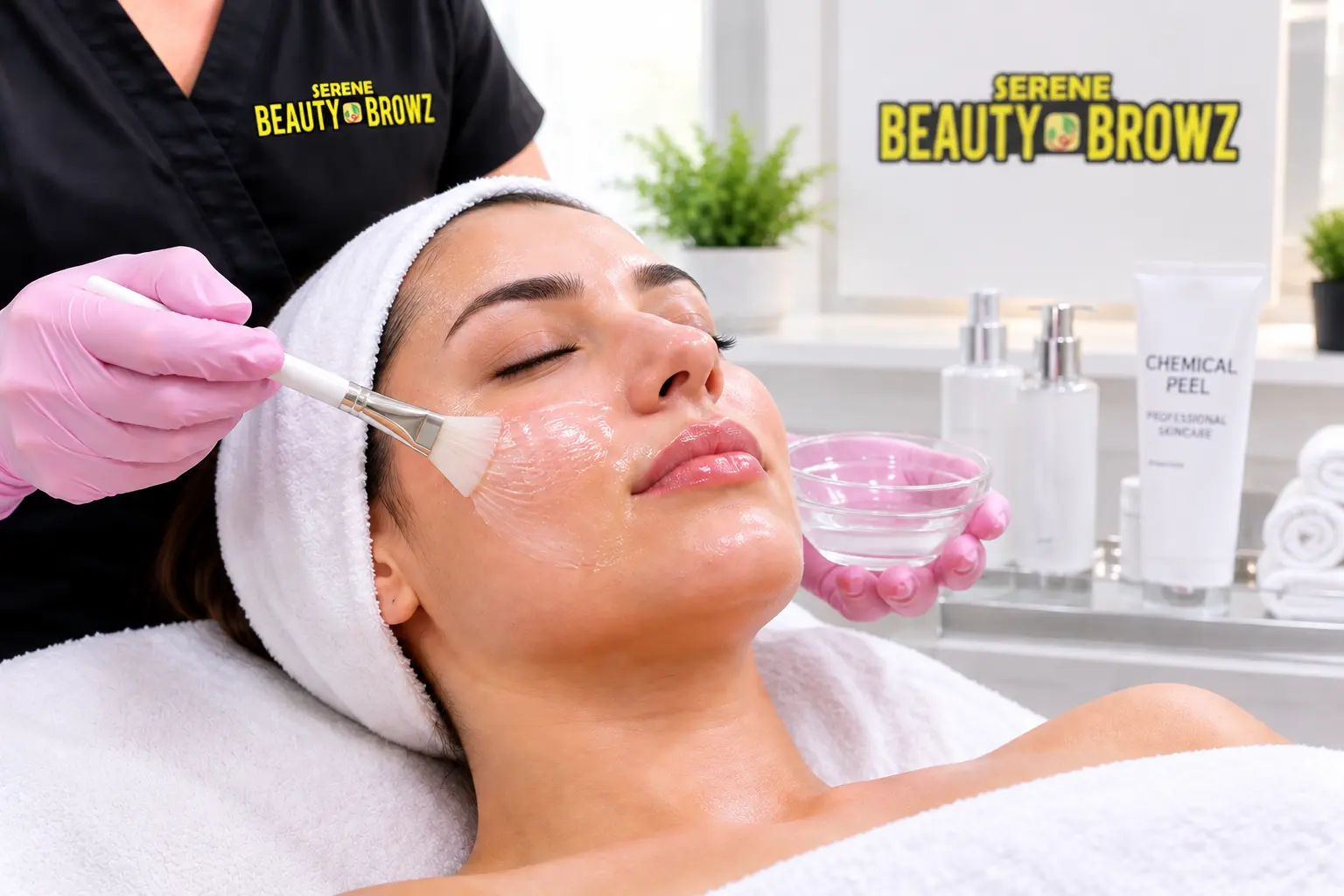
Facial Peel Benefits for Dark Spots: The Complete Guide to Chemical Peels in Warren & Sterling Heights, MI
If you've been staring at a stubborn dark patch on your cheek, a sun spot on your forehead, or leftover acne marks that just won't fade — you've probably typed "facial peel near me" into Google more than once. You're not alone. Hyperpigmentation is one of the top three skin concerns clients bring up during consultations at our Warren and Sterling Heights studios, right alongside acne and fine lines.
A facial peel — done correctly, with the right acid and the right strength for your skin — is one of the fastest, most clinically-supported ways to fade dark spots and even out skin tone. This guide breaks down exactly how facial peels work on hyperpigmentation, what separates an at-home peel from a professional treatment, real recovery timelines, cost expectations, and how to choose the right peel for your skin type — whether you're in Warren, Sterling Heights, or anywhere in Metro Detroit.
📊 By the Numbers
Post-inflammatory hyperpigmentation (dark marks left behind by acne, bug bites, or irritation) affects an estimated 65% of people with darker skin tones at some point, and dermatology research consistently ranks chemical peels among the most effective in-office treatments for fading them — often showing visible improvement after just 1–3 sessions.
In This Guide:
What Is a Facial Peel?
• How Peels Fade Dark Spots
• Types of Peels Compared
• At-Home vs. Professional
• Peel Off Masks & Peeling Gels Explained
• Before & After Expectations
• Cost
• Skin-Type Guide
• Aftercare
• FAQs
What Is a Facial Peel?
A facial peel (also called a chemical peel) uses an acid solution to gently dissolve the "glue" holding dead, discolored skin cells together on the surface layer of your skin. As those old cells lift away, fresher, more evenly pigmented skin underneath is revealed. This accelerated cell turnover is exactly why peels are so effective on dark spots — pigment that sits in the outer layers of skin literally exfoliates off, while deeper-set pigment fades gradually as new collagen and healthy cells regenerate.
Peels fall into three depth categories, and the depth determines both the results and the downtime:
| Peel Depth | Common Acids | Best For | Downtime |
|---|---|---|---|
| Light (Superficial) | Glycolic acid, lactic acid, low-% salicylic acid | Mild dullness, light sun spots, maintenance glow | 0–2 days flaking |
| Medium | TCA (10–35%), Jessner's solution | Moderate hyperpigmentation, acne scars, fine lines | 3–7 days peeling |
| Deep | High-% TCA, phenol (medical-grade only) | Severe sun damage, deep wrinkles | 1–3 weeks, physician-supervised |
Facial Peel Benefits for Dark Spots: How It Actually Works
Dark spots — whether from sun exposure (sun spots/age spots), post-acne marks, or melasma — form because excess melanin clusters in specific areas of skin. A facial peel targets this in three ways:
1. Accelerated Exfoliation
Acids loosen the bonds between pigmented dead skin cells, so they shed faster than they would naturally (natural turnover slows with age, from roughly 28 days in your 20s to 45–60+ days later in life).
2. Melanin Disruption
Certain acids — particularly glycolic and TCA — interfere with the enzyme (tyrosinase) responsible for melanin production, which helps prevent new dark spots from forming while existing ones fade.
3. Collagen Stimulation
Medium-depth peels trigger a controlled healing response that boosts collagen, which improves overall skin texture and helps camouflage residual discoloration and acne scarring.
Glycolic vs. Salicylic vs. Lactic vs. TCA Peel: Which One Targets Dark Spots Best?
Glycolic acid peel — An AHA derived from sugar cane with the smallest molecule size, so it penetrates deepest among AHAs. Excellent for sun spots and overall brightening.
Lactic acid peel — A gentler AHA (from milk) that also hydrates while exfoliating. A great starting point for sensitive or dry skin dealing with dullness and mild discoloration.
Salicylic acid peel — A BHA that's oil-soluble, meaning it goes deep into pores. The top choice if your dark spots are acne-related, since it also treats active breakouts.
TCA peel — Trichloroacetic acid works at a medium depth and is considered one of the most effective options for stubborn hyperpigmentation and melasma when performed by a trained professional.
⚠️ Important Safety Note
Peeling more than one layer of skin at home with high-strength acids or "DIY TCA kits" can cause burns, permanent scarring, or worsened hyperpigmentation — especially on melanin-rich skin, which is more prone to rebound pigmentation if the skin barrier is damaged. For anything beyond a light at-home exfoliant, always consult a licensed esthetician or dermatologist first.
Facial Peel at Home vs. Professional Facial Peel Treatment
Not every "facial peel" is the same thing — and this is where a lot of shoppers get confused between three very different products and services:
Facial Peel Off Mask / Peel Off Mask
These are cosmetic masks (often charcoal or clay-based) that dry into a film you peel away by hand. They lift surface debris and blackheads but contain no meaningful acid concentration — they don't perform true chemical exfoliation and won't meaningfully fade dark spots on their own.
Facial Peeling Gel
A peeling gel uses mild exfoliating enzymes or cellulose to create the visual "rolling" effect of dead skin lifting off. It's a good gentle at-home maintenance step between professional treatments, but it's cosmetic-grade, not a substitute for an actual acid peel.
Professional / Medical Facial Peel
Administered by a licensed esthetician or dermatologist, these use clinical-strength acids at controlled percentages and pH levels, applied with precise timing and neutralization. This is the level of treatment that produces real, measurable dark-spot fading — and it's what we perform in-studio at Serene Beauty & Browz.
Related Blog
Dealing with breakouts alongside dark spots?
Our Acne Facial treatment pairs well with a peel series to calm active breakouts while your hyperpigmentation fades.
Professional Facial Peels in Warren & Sterling Heights, MI
Searching for "facial peel Warren MI," "chemical peel Sterling Heights MI," or "best facial peel near me"? Serene Beauty & Browz operates dedicated studios in both Warren and Sterling Heights, Michigan, offering customized chemical peel treatments matched to your skin tone, concern, and tolerance — not a one-size-fits-all strength.
Our peel consultations always start with:
- A skin assessment to identify whether your dark spots are sun-related, hormonal (melasma), or post-acne
- Fitzpatrick skin typing to select an acid and strength that won't trigger rebound pigmentation
- A realistic treatment plan — most hyperpigmentation responds best to a series of 3–6 peels spaced 2–4 weeks apart, not a single session
Ready to Fade Your Dark Spots?
Book a personalized facial peel consultation at our Warren or Sterling Heights studio and get a custom treatment plan built for your skin.
Book Your Facial Peel Consultation →Facial Peels for Specific Concerns
Facial Peel for Hyperpigmentation & Dark Spots
A series of glycolic or TCA peels, often combined with a physician-recommended at-home brightening routine (vitamin C, niacinamide, and daily SPF), delivers the most reliable fading for sun spots and melasma.
Facial Peel for Acne Scars
Medium-depth TCA or salicylic acid peels stimulate collagen remodeling, which helps soften shallow acne scarring and even out post-acne discoloration over multiple sessions.
Facial Peel for Wrinkles & Glowing Skin
Lighter, more frequent peels boost cell turnover and collagen synthesis, softening fine lines while giving skin an immediate, noticeable radiance — one of the most requested "glow before an event" treatments we perform.
Facial Peel Before and After: What to Realistically Expect
Immediately after a light peel, skin often looks pink and feels tight, similar to mild sunburn — this typically resolves within 24–48 hours. With medium peels, visible flaking or peeling usually begins on day 2–3 and completes by day 5–7. Dark spots don't vanish overnight; most clients see initial fading within 1–2 weeks and full results after completing a recommended series.
Facial Peel Recovery Time by Depth
- Light peel: 0–2 days, minimal to no visible flaking
- Medium peel: 3–7 days of visible peeling; makeup can usually resume after 2–3 days
- Deep peel: 1–3 weeks, always performed under medical supervision
Facial Peel Aftercare Essentials
- Apply broad-spectrum SPF 30+ daily — non-negotiable, since new skin is highly UV-sensitive
- Skip retinoids, exfoliating acids, and waxing for at least 5–7 days post-peel
- Never pick or peel flaking skin manually — let it shed naturally to avoid scarring or new dark marks
- Use a gentle, fragrance-free moisturizer to support the skin barrier while it heals
Facial Peel Cost: What to Budget
Pricing varies by peel depth, acid type, and provider. Light peels are the most affordable option for maintenance, medium peels cost more due to the ingredients and aftercare protocol involved, and deep peels (medical-grade, physician-administered) sit at the top of the price range given the extensive downtime and monitoring required. Most providers offer discounted package pricing for a peel series, since hyperpigmentation responds best to multiple treatments rather than a single visit. Contact our Warren or Sterling Heights studio directly for current pricing and package options.
Choosing a Facial Peel for Your Skin Type
| Skin Type | Recommended Peel | Why |
|---|---|---|
| Sensitive skin | Lactic acid peel (low %) | Gentlest AHA, hydrating, low irritation risk |
| Oily / acne-prone skin | Salicylic acid peel | Oil-soluble, clears pores while fading marks |
| Dry skin | Lactic or mandelic acid peel | Hydrating profile, gentle on the barrier |
| Sun damage / stubborn spots | Glycolic or TCA peel | Deeper penetration, stronger pigment disruption |
Related Blog
Want an all-around glow boost alongside your peel?
Explore our DiamondGlow Facial — a great complement to a peel series for exfoliation and hydration.
Common Mistakes to Avoid
- Skipping SPF after a peel — this is the #1 cause of dark spots returning worse than before
- Using high-strength at-home acid kits without professional guidance
- Expecting one session to erase years of sun damage
- Combining a fresh peel with retinoids or additional exfoliants the same week
- Choosing peel strength based on trends rather than an actual skin assessment
Expert Tips for Best Results
- Start peel series in fall or winter when UV exposure is lower, if possible
- Pair peels with a consistent vitamin C + SPF morning routine to lock in results
- Space professional peels 2–4 weeks apart to allow full skin recovery
- Tell your esthetician about any hormonal changes, pregnancy, or medications (like isotretinoin) before booking
Frequently Asked Questions
Do facial peels really work on dark spots?
Yes. Peels accelerate exfoliation and disrupt excess melanin production, which is why they're one of the most clinically-supported treatments for hyperpigmentation when matched correctly to your skin type.
How many facial peels does it take to fade dark spots?
Most clients need a series of 3–6 sessions spaced 2–4 weeks apart. Deeper, longstanding pigmentation typically needs more sessions than fresh post-acne marks.
What's the difference between a facial peel and a peel off mask?
A peel off mask is a cosmetic product with no true acid exfoliation — it lifts surface debris. A professional facial peel uses clinical-strength acid to trigger actual cell turnover and pigment fading.
Can I do a facial peel at home for dark spots?
Mild at-home peeling gels and low-percentage exfoliants can help with maintenance, but meaningful dark-spot fading requires clinical-strength acid concentrations that are safest applied by a trained professional.
Is a chemical peel safe for darker skin tones?
Yes, when the right acid and strength are selected. Darker skin tones are more prone to rebound pigmentation, so a proper skin assessment beforehand is essential — this is exactly what we do at every Serene Beauty & Browz consultation.
How long is the recovery time after a facial peel?
Light peels: 0–2 days. Medium peels: 3–7 days of visible peeling. Deep peels: 1–3 weeks under medical supervision.
What should I avoid after a facial peel?
Avoid sun exposure without SPF, retinoids, additional exfoliants, and picking at flaking skin for at least 5–7 days after treatment.
How much does a professional facial peel cost?
Cost depends on peel depth and acid type, with package pricing typically available for a recommended series. Contact our Warren or Sterling Heights studio for current pricing.
Which acid is best for acne scars and dark marks?
Salicylic acid is ideal if breakouts are still active, while TCA peels tend to deliver stronger results for existing scarring and stubborn discoloration once acne is under control.
Do I need to see a dermatologist, or can an esthetician perform a facial peel?
Licensed estheticians can safely perform light and medium-depth peels. Deep, phenol-based peels require a physician. Our team is trained and licensed to deliver light-to-medium peels tailored to your skin.
The Bottom Line
Dark spots don't fade with wishful thinking or a drugstore peel-off mask — they fade with the right acid, the right strength, and consistency. A professional facial peel series, backed by daily SPF and a smart aftercare routine, remains one of the most reliable ways to reveal brighter, more even-toned skin.
Let Serene Beauty & Browz Design Your Peel Plan
Serving Warren & Sterling Heights, Michigan — book your consultation today and start your journey to clearer, more even skin.
Visit Serene Beauty & Browz →