
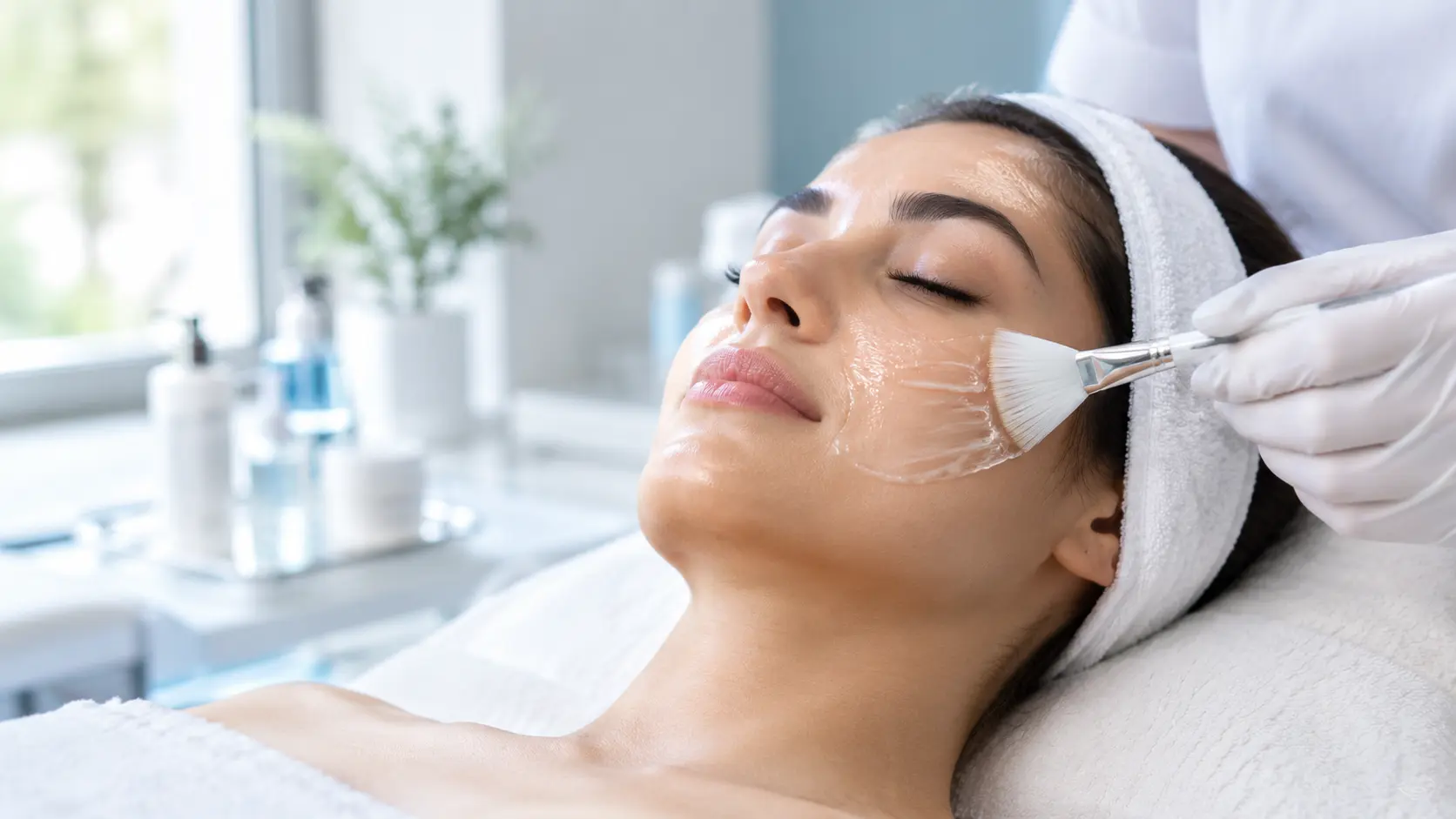
Chemical Peel Side Effects: 5 Things to Know Before Your First Peel
If you have been reading about chemical peels, you have probably seen two very different stories. One version promises glass skin in a single session. The other shows someone shedding like a snake for a week. Neither one is the full picture, and neither one helps you decide whether a peel is right for your skin.
Here is the honest version. A chemical peel is a controlled injury. That is the whole point of it. We apply an acid solution that loosens the bonds holding dead surface cells together, your skin sheds them, and fresh cells come up underneath. Because it is a controlled injury, your skin is going to react. Some of that reaction is normal and expected. Some of it is a warning sign. Knowing the difference is what keeps a peel safe.
In this guide, our estheticians in Warren and Sterling Heights walk through the five things every client should understand about chemical peel side effects — what is normal, what is not, who should skip peels entirely, and how to make your recovery boringly uneventful.
Quick answer: What are the side effects of a chemical peel?
The most common chemical peel side effects are redness, tightness, mild stinging, dryness and flaking or peeling, which usually resolve within 1 to 7 days depending on peel depth. Less common side effects include temporary darkening or lightening of the skin (post-inflammatory hyperpigmentation or hypopigmentation), cold sore flare-ups, prolonged redness, and in rare cases infection or scarring. Side effects increase as peel strength increases, and most serious complications are caused by sun exposure or picking during healing rather than by the peel itself.
The short version: a superficial peel done by a trained esthetician on properly prepped skin is a low-risk treatment. Risk climbs with depth, with unsupervised at-home kits, and with poor aftercare.
1,000,000+
Chemical peels performed in the United States in a single year, an 8% increase year over year, according to the American Society of Plastic Surgeons 2023 Procedural Statistics Report. Peels are one of the most-performed minimally invasive skin treatments in the country — which also means there is a lot of misinformation circulating about them.
What a Chemical Peel Actually Does to Your Skin
A chemical peel uses an acid solution — glycolic, lactic, salicylic, mandelic, TCA, or a blended formula such as a Jessner's solution — applied to cleansed skin for a controlled amount of time. The acid dissolves the "glue" between dead keratinocytes on the surface. Those cells lift away, and the skin responds by speeding up cell turnover and stimulating collagen underneath.
That process is why peels work so well for acne, clogged pores, dark spots, melasma, sun damage, dullness and fine lines. It is also why your skin is temporarily more fragile, more reactive, and dramatically more sun-sensitive afterwards.
Three variables decide how strong your reaction will be: which acid is used, at what concentration and pH, and how long it stays on your skin. A licensed esthetician controls all three. A drugstore kit controls none of them reliably, which is the single biggest reason at-home peels cause more damage than professional ones.
1. Some Side Effects Are Completely Normal—Here Is What Normal Looks Like
The first thing clients usually ask after a peel is some version of "is this supposed to be happening?" Almost always, yes. These reactions are the treatment working, not the treatment failing.
Normal, expected reactions after a chemical peel
- Redness (erythema). Similar to a mild sunburn. A few hours after a light peel, a few days after a medium one.
- Tightness. Your skin feels like it is a half size too small. This peaks around day 2.
- Stinging or warmth during application. Expected, and it should fade within minutes of neutralising or rinsing.
- Dryness and flaking. Often light and dusty rather than dramatic sheets. Many superficial peels produce almost no visible peeling at all.
- Slight darkening before shedding. Treated spots can look temporarily darker or more defined right before they flake away. This is called frosting-adjacent darkening and it is a good sign.
- Temporary sensitivity. Your usual serum may sting for a few days. That is why we pause actives.
Typical chemical peel recovery timeline
| When | What you will usually see | What to do |
|---|---|---|
| Day 0 (treatment day) | Pink to red, warm, tight. Some clients look simply glowing. | Gentle cleanser, bland moisturiser, no makeup for the rest of the day. |
| Days 1–2 | Tightness peaks. Skin may look slightly tanned or dull. Flaking starts around the mouth and nose. | Moisturise often. SPF 30–50 every morning without exception. |
| Days 3–5 | Peak peeling and shedding. This is the awkward stage. | Do not pull, pick, scrub or exfoliate. Let it fall off on its own. |
| Days 5–7 | Shedding finishes. New skin looks brighter and more even. | You can usually restart gentle actives — ask your esthetician first. |
| Weeks 2–4 | Tone continues to even out. Collagen response builds quietly underneath. | Book your next peel in the series if one was recommended. |
Timelines are typical ranges for superficial to light-medium peels. Your own recovery depends on peel depth, skin type and how closely you follow aftercare.
2. Side Effects Scale Directly With Peel Depth
This is the single most useful thing to understand before booking. "Chemical peel" is not one treatment. It is a category that runs from a gentle enzyme refresh with zero downtime all the way to a medical resurfacing procedure. The side effect profile is completely different at each level.
| Peel depth | Common acids | Typical downtime | Side effect risk |
|---|---|---|---|
| Superficial / light | Enzyme, lactic, mandelic, low-strength glycolic, salicylic | 0–3 days | Low — redness, light flaking |
| Medium | Stronger glycolic, Jessner's solution, TCA at moderate strength | 3–7 days | Moderate — visible peeling, swelling, pigment shifts possible |
| Deep | High-strength TCA, phenol | 2–3 weeks or more | High — medical setting only, real scarring and pigment risk |
At Serene Beauty & Browz we work in the superficial to medium range — enzyme peels, lactic peels, glycolic peels, Jessner's peels and TCA peels performed by licensed estheticians. Deep phenol peels belong in a physician's office under sedation, and any spa promising you that level of result with no downtime is overselling.
For most first-time clients we intentionally start light. A series of four to six superficial peels spaced two to four weeks apart will out-perform one aggressive peel, with a fraction of the side effects. Slow is not a compromise here. It is the better protocol.
Not sure which peel strength your skin can handle?
Book a skin consultation at our Warren or Sterling Heights studio. Our licensed estheticians assess your skin type, history and goals, then recommend the gentlest peel that will actually get you results — not the strongest one we can sell you.
Book a Skin Consultation Call (586) 262-40373. Deeper Skin Tones Carry a Real Risk of Post-Inflammatory Hyperpigmentation
This is the side effect the internet talks about least and estheticians worry about most. Post-inflammatory hyperpigmentation, or PIH, is when the skin responds to inflammation by producing extra melanin — leaving a dark patch exactly where you were trying to clear one.
PIH can affect anyone, but the risk is meaningfully higher for clients with medium to deep skin tones (broadly, Fitzpatrick types IV through VI), because those skin types have more reactive melanocytes. The irony is painful: the people most likely to seek out a peel for dark spots are also the people most likely to develop new ones from an overly aggressive peel.
This does not mean deeper skin tones cannot have peels. It means the protocol has to change. In practice that looks like:
- Choosing gentler acids such as mandelic or lactic over aggressive TCA as a starting point.
- Using lower concentrations with shorter contact times, building tolerance across a series.
- Priming the skin for two to four weeks beforehand with a pigment-regulating routine, where appropriate.
- Being uncompromising about daily SPF before and after, because UV exposure is what turns a mild reaction into a lasting dark patch.
- Always doing a patch test for a first-time client with a history of pigmentation.
If a provider does not ask about your skin tone, your pigmentation history, or your sun habits before choosing a peel, that is a red flag about the provider — not about peels.
4. Most Complications Come From Aftercare Mistakes, Not the Peel Itself
In our experience, when a peel goes wrong for an otherwise healthy client, the cause is almost never the solution in the bottle. It is what happened in the seven days afterwards. Fresh post-peel skin has a compromised barrier. Treat it like new skin, because that is exactly what it is.
The seven aftercare rules that prevent almost every problem
- Wear SPF 30 or higher, every single day. Reapply if you are outdoors. This is the rule that matters most, and skipping it is the number one cause of post-peel pigmentation.
- Do not pick, peel, pull or scrub. Pulling a flap of skin that is not ready to release tears living tissue underneath. That is how scars and dark marks form.
- Pause your actives. No retinol, retinoids, AHAs, BHAs, vitamin C, benzoyl peroxide or exfoliating tools for at least 5 to 7 days, or until your esthetician clears you.
- Keep it simple and bland. Gentle cleanser, fragrance-free moisturiser, SPF. That is the entire routine for a week.
- Skip heat. No saunas, steam rooms, hot yoga, intense cardio or long hot showers for 48 to 72 hours. Heat increases inflammation and pigment risk.
- Hold off on other treatments. No waxing, threading, laser, microneedling or dermaplaning on treated areas for about two weeks.
- Do not layer peels. Respect the spacing your esthetician gives you. Chasing faster results by peeling again early is how people end up with chronic irritation.
A note on waxing and threading
Clients often book a peel and a brow service on the same visit. Please do not. Wax and thread on peel-treated skin can lift the skin itself. If you want both, schedule your brow appointment before the peel, or wait about two weeks after.
5. Know the Red Flags That Mean You Should Call Someone
Normal side effects are uncomfortable but predictable, and they improve a little every day. The signs below are different. They are not common, but you should know them so you never sit at home wondering.
Contact your provider or a doctor if you notice:
- Blistering, open weeping areas, or skin that looks raw rather than flaky
- Yellow crusting, pus, spreading warmth or increasing pain — possible infection
- Clusters of small painful blisters, especially around the mouth — a possible cold sore (herpes simplex) flare, which peels can trigger
- Redness that is getting worse after day 3 instead of better
- Swelling of the eyelids or lips, hives, or difficulty breathing — seek emergency care immediately
- Fever or feeling unwell after a peel
If you have a history of cold sores, tell your esthetician before booking. Antiviral prophylaxis prescribed by your doctor before a medium-depth peel is a standard, sensible precaution, and it takes the risk off the table.
Who Should Not Get a Chemical Peel
A good esthetician will turn you away sometimes, and that is a feature rather than a failure. Peels are generally postponed or avoided if you:
- Are pregnant or breastfeeding (some acids are avoided as a precaution — check with your doctor)
- Have taken oral isotretinoin in the last 6 months
- Have active eczema, psoriasis, rosacea flares, dermatitis, sunburn, open cuts or an active cold sore in the treatment area
- Have a recent tan, sunburn or a spray tan on the area
- Have had recent laser, microneedling, waxing or dermaplaning on the area
- Have a known allergy to an ingredient in the peel solution, including aspirin sensitivity with salicylic peels
- Have a history of keloid scarring or abnormal wound healing
- Have an autoimmune or immune-suppressing condition, or take medication that affects healing — clearance from your physician first
This list is not exhaustive. Your consultation exists precisely to catch the things a blog post cannot.
How to Prep So You Have Fewer Side Effects
Preparation is genuinely half the outcome. Here is what we ask clients to do before a peel appointment in Warren or Sterling Heights.
Two to four weeks before
- Wear daily SPF and avoid deliberate sun exposure and tanning beds.
- If your esthetician recommends a priming routine, start it — this is especially important for pigmentation-prone skin.
- Book the consultation and mention every medication and supplement you take.
One week before
- Stop retinol and retinoids.
- Stop waxing, threading, depilatory creams, scrubs and at-home exfoliating devices on the area.
- Do not schedule a laser or microneedling session in the same window.
The day of
- Come with a clean face, no makeup if possible.
- Do not shave the area right before your appointment.
- Plan your week. If you have a wedding, a photoshoot or a big presentation, leave at least 10 to 14 days between the peel and the event.
Common Mistakes That Make Side Effects Worse
- Buying a strong at-home peel kit. Home kits rarely disclose pH, and pH matters more than percentage. Unbuffered high-strength acid on unprepped skin is how chemical burns happen.
- Assuming more peeling equals better results. It does not. Visible shedding is a side effect, not the outcome. Plenty of effective peels barely flake.
- Booking a peel days before an event. Give yourself a buffer of at least two weeks.
- Hiding your medication list. Isotretinoin history, photosensitising antibiotics and certain acne medications genuinely change what is safe.
- Going back to your full routine on day 2. Reintroducing retinol early is one of the fastest ways to a red, stinging, irritated face.
- Peeling in peak summer without SPF discipline. Michigan summers are short and everyone wants to be outside. That is precisely when pigment problems happen.
Chemical Peels: Pros and Cons at a Glance
| Pros | Cons |
|---|---|
| Treats several concerns at once — texture, tone, acne, dullness, fine lines | Downtime and visible flaking with medium peels |
| Non-surgical, no needles, no anaesthesia for superficial and medium peels | Requires strict sun protection afterwards |
| Customisable — strength can be dialled to your skin type | Usually needs a series, not a single visit |
| Relatively affordable compared with laser resurfacing | Not suitable during pregnancy, active flares or recent isotretinoin use |
| Well-established treatment with decades of clinical use | Pigmentation risk if performed carelessly on deeper skin tones |
Chemical Peel vs Facial vs Microneedling: Which Has More Side Effects?
| Treatment | Best for | Typical downtime | Main side effects |
|---|---|---|---|
| Chemical peel | Pigmentation, acne, texture, dullness, fine lines | 0–7 days | Redness, flaking, tightness, pigment shifts |
| Professional facial | Hydration, congestion, maintenance, relaxation | None | Brief redness, occasional purging after extractions |
| Microneedling | Acne scarring, pores, collagen, firmness | 1–3 days | Redness, pinpoint bleeding, swelling, sensitivity |
If you want visible resurfacing with the least downtime, a series of superficial peels is usually the sweet spot. If your primary concern is indented acne scarring rather than surface pigment, microneedling may suit you better. Many clients end up alternating the two across a treatment plan, spaced appropriately.
Explore Our Treatments
Chemical Peel Services in Warren & Sterling Heights ›
See our full peel menu — enzyme, lactic, glycolic, Jessner's and TCA peels — with pricing starting at $45, plus what each one treats.
Professional Facials in Michigan ›
Not ready for a peel? A customised facial is a gentle, zero-downtime way to improve your skin and let us assess it before recommending anything stronger.
Expert Tips From Our Estheticians
- Book your first peel in autumn or winter if pigmentation is a concern. Lower UV exposure means lower risk.
- Take a clear, unfiltered photo in natural light before your first session. Skin changes gradually and memory is unreliable.
- Keep a bland, fragrance-free moisturiser and a hat by the door for peel week. Removing friction makes compliance easy.
- If your skin is flaking unevenly, moisturise more rather than exfoliating. Dry skin flakes in patches; hydrated skin sheds evenly.
- Tell us if a previous peel anywhere else caused a reaction. That history changes what we choose for you, and we would much rather know.
Frequently Asked Questions About Chemical Peel Side Effects
How long do chemical peel side effects last?
Most side effects from a superficial peel resolve within 1 to 3 days. A medium-depth peel typically causes redness and peeling for 3 to 7 days. Sun sensitivity lasts longer than the visible symptoms — plan on strict SPF use for at least 4 weeks afterwards.
Is it normal for my face to not peel after a chemical peel?
Yes, and it is very common. Many superficial peels work at a cellular level with little or no visible shedding. Peeling is a side effect, not a measure of success. If your tone and texture improve over the following two weeks, the peel worked.
Can a chemical peel make hyperpigmentation worse?
It can, if the peel is too aggressive for your skin type or if you have unprotected sun exposure while healing. This is called post-inflammatory hyperpigmentation and it is more likely on medium to deep skin tones. Starting with gentle acids, using a properly spaced series and wearing daily SPF dramatically reduces the risk.
Do chemical peels hurt?
You will feel warmth, tingling or a stinging sensation during application, usually rated mild to moderate. It typically lasts only a few minutes and eases as soon as the solution is neutralised or rinsed. Stronger peels feel more intense; a cool fan is used for comfort.
What should I not do after a chemical peel?
Do not pick or pull at peeling skin, skip sunscreen, use retinol or exfoliating acids, visit a sauna or hot yoga class, wax or thread the treated area, or book another peel before your esthetician recommends it. Keep your routine to a gentle cleanser, moisturiser and SPF for about a week.
Can chemical peels cause breakouts?
A temporary purge is possible, particularly with salicylic or glycolic peels, because increased cell turnover pushes existing congestion to the surface faster. It usually settles within one to two weeks. Persistent new breakouts after that point may mean the aftercare products used were too occlusive, so tell your esthetician.
Are at-home chemical peels safe?
Low-strength over-the-counter exfoliants are generally fine. Strong DIY peel kits are not recommended, because they often do not disclose pH, are applied without neutralisation timing, and cannot be adjusted mid-treatment. Most chemical burns we see in consultations came from unsupervised home use, not professional treatment.
Can I get a chemical peel while pregnant?
Many providers avoid peels during pregnancy and breastfeeding as a precaution, and some acids such as salicylic are specifically avoided. Pregnancy also changes pigmentation behaviour, which raises melasma risk. Speak with your obstetrician first, and tell your esthetician before booking.
How often can I safely get a chemical peel?
Superficial peels are commonly spaced 2 to 4 weeks apart in a series of 4 to 6 sessions, then maintained every 6 to 12 weeks. Medium peels are spaced much further apart, often several months. Peeling more frequently than recommended increases irritation and pigmentation risk without improving results.
Where can I get a professional chemical peel near me in Michigan?
Serene Beauty & Browz performs professional chemical peels at two Metro Detroit locations: 8282 East 12 Mile Road, Warren, MI 48093, and 43668 Schoenherr Road, Sterling Heights, MI 48313. We serve clients across Warren, Sterling Heights, Troy, Utica, Shelby Township and Macomb County. Peels start at $45.
The Bottom Line
Chemical peel side effects are real, but they are also predictable, manageable and mostly temporary. Redness, tightness and flaking are the treatment doing its job. Pigment changes, infection and scarring are the rare outcomes, and they are far more likely when a peel is chosen badly, performed carelessly, or followed by a week of sun and picking.
The clients who have the smoothest experiences are the ones who did three unglamorous things: they had a proper consultation, they started with a peel strength their skin could actually handle, and they wore sunscreen every day afterwards. That is genuinely most of it.
If you are in Metro Detroit and thinking about your first peel, let us look at your skin before you commit to anything. A consultation costs you nothing but half an hour, and it is the single best way to avoid every side effect described on this page.
Ready for Clearer, Brighter Skin — Safely?
Serene Beauty & Browz has been caring for Metro Detroit skin since 2013. Our licensed estheticians will match you to the right peel for your skin type, walk you through aftercare properly, and never push a treatment you do not need. Two locations, easy booking, real results.
Book Your Chemical Peel View Peel Menu & PricingWarren: (586) 486-4860 | Sterling Heights: (586) 262-4037
Medical disclaimer: This article is for general information only and is not medical advice, diagnosis or treatment. Chemical peels are cosmetic treatments and individual results and reactions vary. Always consult a licensed esthetician, dermatologist or physician about your own skin, medications and medical history before booking a peel.